Invasive Plant Clearing on the Garden Route: What You Need to Know
Invasive alien plants are the single biggest biodiversity threat facing private landowners on the Garden Route. They outcompete indigenous vegetation, alter fire regimes, reduce water availability, degrade wildlife habitat, and — if left unmanaged — can fundamentally transform the ecology of a property within a decade. This guide covers what you need to know: which species are present, what the law requires, and how effective clearing actually works.
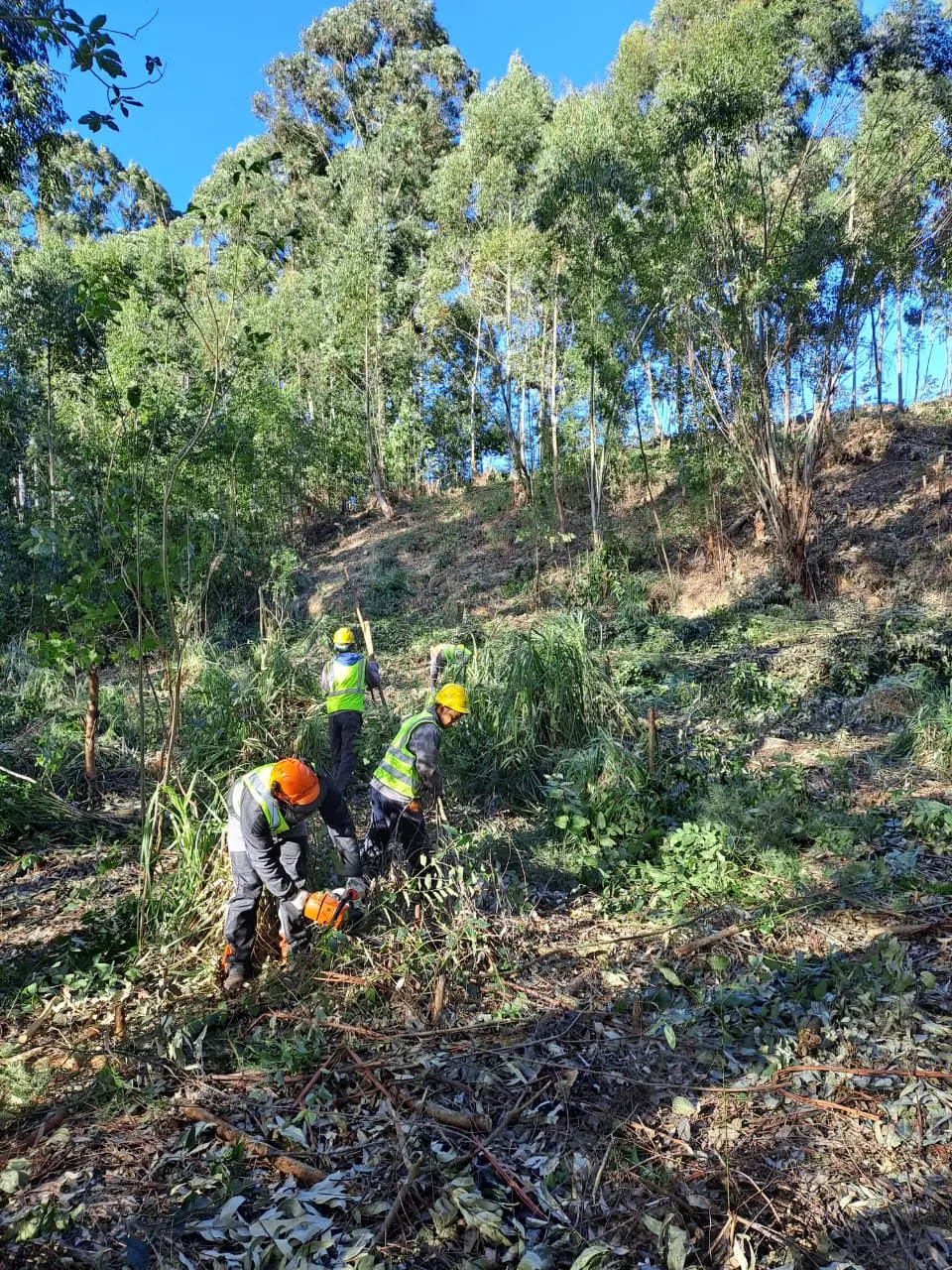
The Invasive Plant Problem on the Garden Route
The Garden Route's combination of Mediterranean rainfall patterns, mild temperatures, nutrient-poor soils, and periodic fire disturbance created a unique biome that supports extraordinary plant diversity. These same conditions, however, prove equally hospitable to a suite of introduced species — particularly Australian acacias — that are now among the most damaging invasive species in the Cape Floristic Region.
The problem is not new. Port Jackson willow (Acacia saligna) was deliberately planted across the Western Cape for dune stabilisation and firewood production from the late 19th century onwards. By the time its invasive potential was recognised, it had spread across hundreds of thousands of hectares. Managing the legacy of that decision now falls to both government programmes and private landowners.
On a typical residential or smallholding property on the Garden Route, you are likely to encounter one or more of the following:
- Port Jackson willow (Acacia saligna) — prolific seed producer, forms dense monocultures, drastically alters soil nitrogen chemistry
- Rooikrans (Acacia cyclops) — dominant on coastal dunes and lower fynbos slopes, highly competitive in sandy soils
- Black Wattle (Acacia mearnsii) — particularly aggressive in riparian zones and high-rainfall areas, major water user
- Bugweed (Solanum mauritianum) — fast-growing shrub/tree that colonises disturbed ground and forest margins
- Long-leafed wattle (Acacia longifolia) — common on coastal strips and lower slopes
- Hakea species (Hakea sericea, H. gibbosa) — found on rocky outcrops and mountain fynbos interfaces
- Lantana (Lantana camara) — invades forest margins and disturbed ground, highly toxic to livestock
Your Legal Obligations Under NEMBA
South Africa's National Environmental Management: Biodiversity Act (NEMBA), together with the Alien and Invasive Species (AIS) Regulations of 2014, places a legal obligation on all landowners to control invasive species listed under the regulations. Failure to do so is a criminal offence.
The AIS Regulations categorise species into four categories:
- Category 1a: Must be eradicated. No exceptions, no permits.
- Category 1b: Must be controlled (not necessarily eradicated, but actively managed to prevent spread). Most common IAPs fall here.
- Category 2: May be kept under permit conditions, but uncontrolled spread is prohibited.
- Category 3: May no longer be introduced but existing specimens can be maintained.
Most of the commonly encountered invasive plants on the Garden Route — Port Jackson, Rooikrans, Black Wattle, Bugweed — are Category 1b. This means you are legally required to manage them on your property. Six Kingdoms can advise on your specific obligations based on your property's location and current vegetation status.
Why One Clearing Is Not Enough
The most common mistake landowners make is treating invasive plant clearing as a once-off event. Cut down the acacias, pile them for burning, and the job is done. In reality, a single clearing operation is just the start of a multi-year process.
Australian acacias produce extraordinarily persistent seed banks. Acacia saligna seeds can remain viable in the soil for 20 years or more. A clearing operation that removes standing biomass triggers mass germination from this seed bank — within 12 months, the cleared area can have thousands of seedlings per square metre. These need to be followed up and treated before they mature and add to the seed bank again.
Effective invasive plant management requires:
- Initial clearing of standing biomass (cut and treat stumps with herbicide)
- First follow-up at 6–12 months (treat seedling flush)
- Second follow-up at 18–24 months (manage second cohort)
- Annual monitoring and spot treatment for years 3–7
- Eventual transition to an ongoing maintenance programme
Six Kingdoms designs multi-year management plans that sequence these interventions correctly and ensure that seed bank depletion actually happens. View our land management services →
Clearing Methods
The appropriate clearing method depends on the species, the density of infestation, the terrain, and any sensitive vegetation within or adjacent to the clearing area.
For large-stemmed acacias, the standard approach is cut-and-paint: stems are cut as close to ground level as possible and the cut surface immediately treated with a herbicide (typically triclopyr-based) to prevent resprouting. Leaving cut stumps untreated leads to vigorous multi-stemmed regrowth.
For seedlings, hand-pulling is highly effective when the soil is moist and the seedlings are small enough for the root system to come out intact. Larger seedlings may require foliar herbicide treatment or individual cut-and-paint treatment.
Biological control agents — insects and fungal pathogens specifically approved for South African conditions — are increasingly part of integrated invasive plant management programmes for some species, particularly Acacia saligna (where the seed-feeding weevil Melanterius servulus has shown promising results). Biocontrol alone is not sufficient but can significantly reduce the long-term management burden.
Sensitive Clearing: Working Around Indigenous Vegetation
Many Garden Route properties have invasive plants growing in close proximity to indigenous vegetation worth preserving — remnant fynbos, forest margins, wetland vegetation, or established indigenous garden plantings. Clearing in these contexts requires skill and ecological knowledge to ensure that the removal of invasives does not cause collateral damage to the indigenous species.
Six Kingdoms brings an ecological lens to every clearing project. We identify which species to protect, which to retain as nurse plants during the transition phase, and where to apply active restoration planting to accelerate indigenous vegetation recovery. See our ecological design approach →
Getting Started With Invasive Plant Management
The best first step is an on-site assessment. We visit your property, identify the species present, assess the extent and density of infestation, and provide a structured management plan with indicative costs and timelines.
For properties with significant invasive plant burdens, this assessment forms the basis of a Working for Water application, which can provide funding support for clearing operations in qualifying catchment areas. Six Kingdoms is experienced in navigating these funding mechanisms and can assist with the application process.
Invasive Plant Assessment & Management
Six Kingdoms provides professional invasive alien plant management across the Garden Route — from initial assessment and clearing to long-term stewardship programmes.
Request a Property Assessment →